
Bath Tai Chi shares practical, down-to-earth guidance on tai chi and qigong for health, balance, and mindful movement in bath for readers across the UK.
- 0123456789
- Angle Bd Abdelmoumen & rue soumaya, Résidence
- [email protected]
Bath Tai Chi shares practical, down-to-earth guidance on tai chi and qigong for health, balance, and mindful movement in bath for readers across the UK.
 By Margaret Ashworth
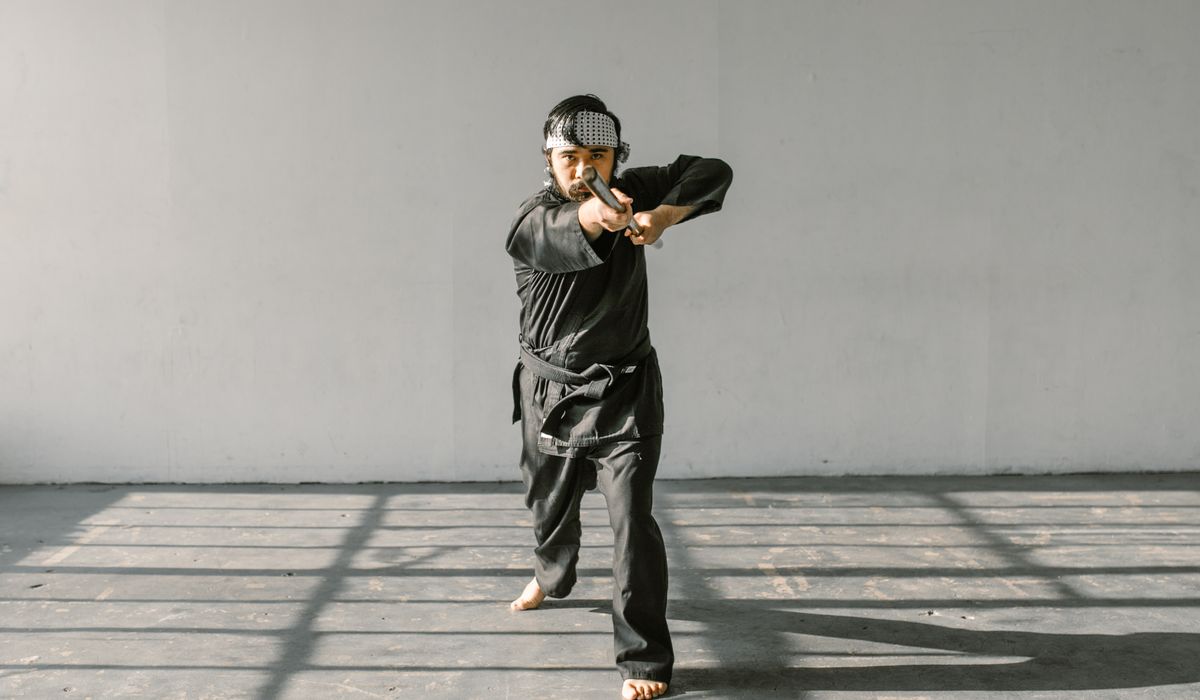
Watch an experienced tai chi player move through a form and it looks effortless, as though the body simply knows what to do. What you do not see are the years of leaning on walls, sitting on stacked cushions and holding broom handles at arm's length while the nervous system worked out where everything belonged. Props are not a crutch for the uncoordinated. They are tools that give you honest feedback, and they let you practise accurately rather than approximately.
This matters particularly at home. Many of us in Bath practise in modest sitting rooms, in attic conversions with sloping ceilings, or on floors that have settled gently into their Georgian foundations. A little furniture and a couple of household items can turn an awkward space into somewhere you can genuinely learn.
The humblest prop in your home is also one of the most versatile. A firm cushion, a folded blanket or a yoga block does three useful jobs.
Choose something firm rather than squishy. A cushion that collapses under your weight gives no useful information to your body.
In qigong standing practice, the wall is invaluable — and it costs nothing. Stand with your heels a few inches away from it, letting the back of the pelvis, the mid-back and the back of the head rest lightly against the surface. Do not press. Simply notice where contact is missing or where you are pushing. Most people discover their chin has drifted forward or their lower ribs have flared.
The wall is also excellent for balance work. Resting two fingertips on it while you shift weight from one leg to the other allows you to explore the movement fully without the fear of wobbling. As confidence grows, reduce to one finger, then to a feather-light touch, then to hovering just above the surface. In Bath, where many of us walk on steep pavements and slippery leaves in winter, this patient progression translates directly into steadier walking.
A sturdy dining chair is a complete training aid. Used properly, it supports three distinct kinds of practice.
Make sure the chair does not slide. If your floor is polished stone or original floorboards, place it against a wall or stand it on a non-slip mat.
A stick about a metre long — a lightweight cane, a dowel or a clean broom handle — teaches alignment faster than almost anything else. Hold it horizontally in front of you with both hands, shoulder-width apart, and you will immediately feel if one hand is higher than the other, if one shoulder is creeping up, or if you are gripping too tightly. The stick does not lie.
It is equally useful for wrist and forearm rotations, for exploring the spiral of the arms in qigong, and as a walking aid when you want to practise the gait pattern of tai chi with a little extra security. Hold it vertically as a staff, or horizontally across the palms while you turn the waist and let the arms follow.
You do not need much. A cushion, access to a clear wall, one reliable chair and a stick will carry you through months of learning. Keep them together in the corner of the room where you practise, so setting up takes seconds rather than minutes. Five minutes of accurate work with a prop is worth half an hour of guessing.
Use them generously at first, then taper. Let the wall take a little less weight each week. Let the chair go and stand free. Put the stick down and feel the same shape in your arms. That gradual withdrawal is how the form becomes yours — and how the balance you build indoors follows you out onto the streets of Bath.


We are not gonna make spamming
