
Bath Tai Chi shares practical, down-to-earth guidance on tai chi and qigong for health, balance, and mindful movement in bath for readers across the UK.
- 0123456789
- Angle Bd Abdelmoumen & rue soumaya, Résidence
- [email protected]
Bath Tai Chi shares practical, down-to-earth guidance on tai chi and qigong for health, balance, and mindful movement in bath for readers across the UK.
 By Margaret Ashworth
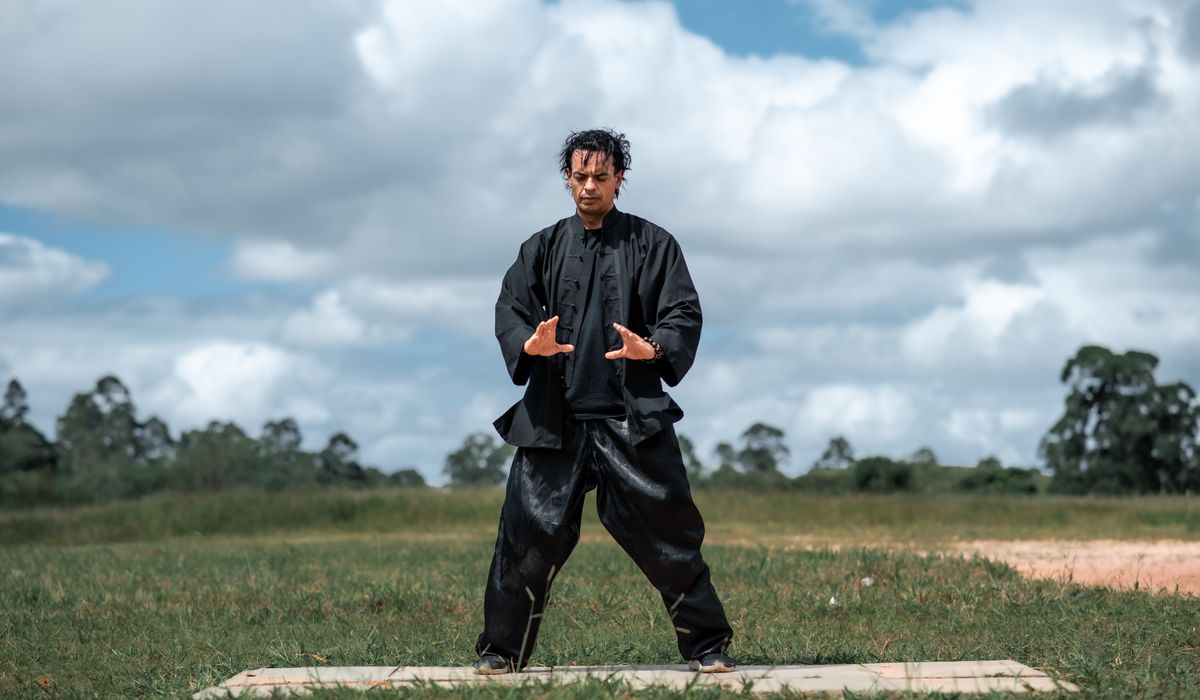
Ask any experienced teacher in Bath what holds a beginner back, and clothing rarely tops the list — until it does. Tai chi and qigong ask the body to move in ways that everyday life seldom demands: slow, continuous, spiralling, often with the arms above the head or the knees deeply bent. A pair of stiff jeans or a tight shirt collar can turn a gentle sequence into a fidget. When you are not tugging at a waistband or adjusting a strap, the mind settles far more easily into the breath and the movement.
The good news is that you almost certainly own something suitable already. You do not need specialist uniforms, silk outfits or expensive kit. You need clothing that disappears from your awareness the moment you begin.
Cotton, linen, bamboo and lightweight wool are the traditional favourites for good reason. They allow air to circulate, absorb perspiration and feel pleasant against the skin during the slower, warmer moments of a session. Synthetic fabrics can trap heat and cling uncomfortably, particularly in a warm hall or during a summer class in Royal Victoria Park.
Look for materials with a little natural give. Cotton jersey, soft linen blends and fine-knit bamboo all move with the body rather than against it. If you wear a synthetic base layer for warmth in winter, keep it thin and close-fitting, then cover it with something looser in a natural fibre.
Bath is a city of microclimates. A morning session in Sydney Gardens can begin cool and misty and finish warm and bright, while an evening class in a stone-floored hall may feel chilly no matter the season. Layering solves both problems.
Start with a fitted but unrestrictive base layer — a vest or short-sleeved top in a natural fibre. Add a loose mid-layer such as a soft cotton shirt, a light jumper or a zip-front cardigan that you can remove once you have warmed up. Finish with something easily shed: a lightweight fleece, a wrap or a thin jacket.
For outdoor practice, a light waterproof shell is worth keeping nearby. Avoid anything with a hood that flops forward when you tilt your head, and steer clear of long coats that restrict the hips. The aim is to stay comfortable without needing to stop and reorganise yourself mid-form.
Your feet carry a great deal of information during tai chi. Thick, cushioned soles may feel soft when you stand still, but they blur the connection between foot and floor and can make weight shifts feel vague. What you want is a sole that is thin enough to feel the ground, flat enough to keep you stable, and flexible enough to bend with the foot.
Flat canvas shoes, minimalist trainers, plimsolls or dedicated tai chi slippers all work well. The heel should be level with the toe, or very nearly so — a raised heel tips your weight forward and disturbs the alignment you are trying to cultivate.
Some garments quietly sabotage a session. Belts with bulky buckles dig in during forward folds and twists. Long, dangling necklaces and scarves swing into your face and can catch on a partner during push hands. Tight waistbands restrict the diaphragm exactly when you are learning to breathe deeply into the belly.
Watches, rings and heavy bracelets are best removed before class. They interfere with the relaxed wrist and the sense of the hand as an open, receptive surface. Hair that falls across the face is a distraction, so a soft band or a loose tie is a small but genuine kindness to yourself.
Keep a simple kit bag ready by the door. A thin jumper, a pair of flat shoes, a small towel and a water bottle cover almost every eventuality. If you practise outdoors, add a light waterproof and perhaps a hat with a soft brim in summer. A folded blanket or cushion is useful for seated meditation and qigong breathing work, particularly on cold stone floors.
The guiding principle is simple: nothing tight, nothing slippery, nothing that demands your attention. When your clothing is quiet, your practice can be too. Turn up in something soft and loose, with flat shoes on your feet, and you will find that the mind follows the body into stillness far more readily than you expected.


We are not gonna make spamming
