
Bath Tai Chi shares practical, down-to-earth guidance on tai chi and qigong for health, balance, and mindful movement in bath for readers across the UK.
- 0123456789
- Angle Bd Abdelmoumen & rue soumaya, Résidence
- [email protected]
Bath Tai Chi shares practical, down-to-earth guidance on tai chi and qigong for health, balance, and mindful movement in bath for readers across the UK.
 By Eleanor Whitcombe
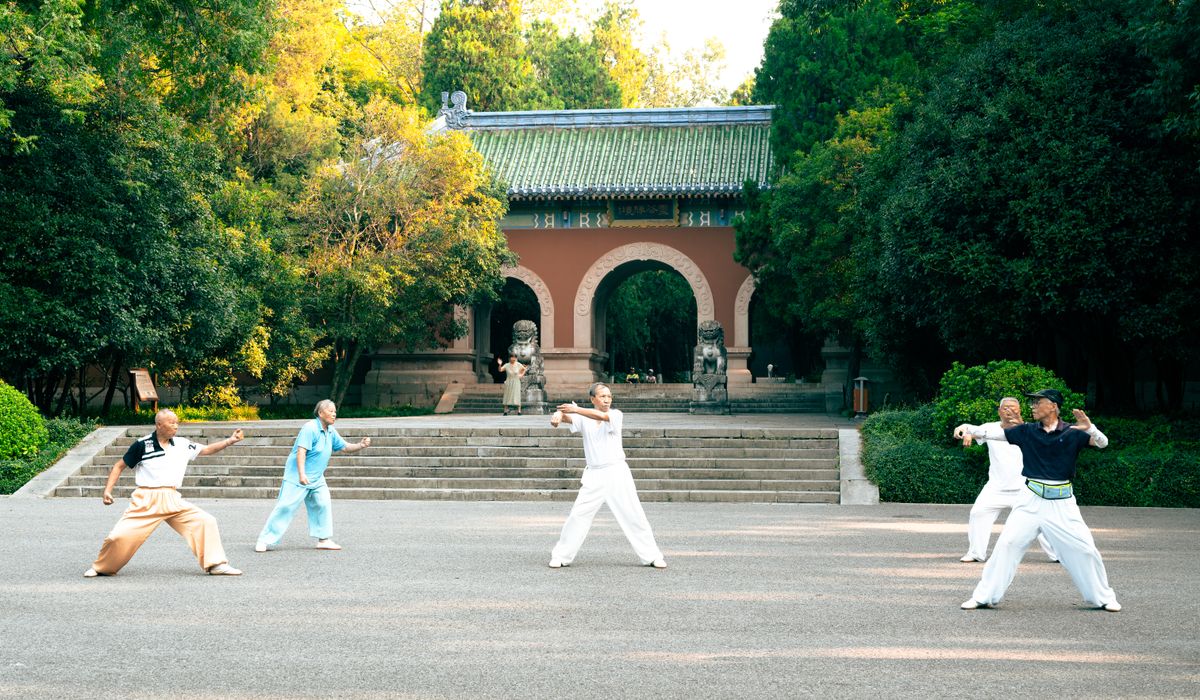
Most people who come to a first tai chi class in Bath arrive thinking about the postures. They want to know where the hands go for Brush Knee, or how far the feet sit apart in Cloud Hands. It is an understandable instinct. Postures are visible, nameable, and easy to measure against a photograph or a teacher's demonstration. Yet ask anyone who has practised for a few years what they actually work on, and the answer is almost always the same: the transitions.
A form is not a string of separate shapes. It is one continuous movement that happens to pass through recognisable positions. If you pause, reset, then launch into the next posture, you are practising a series of stills rather than a flowing whole. The transitions are where balance is tested, where the breath is either carried or lost, and where the real skill of tai chi and qigong quietly accumulates.
When students struggle, the difficulty nearly always shows up in the same handful of ways. See if any of these feel familiar:
None of these are moral failings. They are simply what happens when the mind treats the destination as more important than the journey. In Bath, where so many of us walk up and down hills all day, we already know something about this: the climb is not an interruption to the arrival, it is the walk itself.
A good transition has three qualities, and they can be practised deliberately.
Continuous. The movement never fully stops. Even at the apparent end of a posture there is a quiet, internal continuation, like the turn of a tide before it withdraws. In practice this means your weight is always shifting, your arms are always travelling a small distance, and your attention is always one step ahead.
Rooted. At every moment, at least one part of you is clearly connected to the ground. As you transfer weight from one leg to the other, the receiving foot should feel settled before the giving foot releases. That single sequencing rule, applied patiently, removes most wobbling at a stroke.
Breathable. The breath leads the movement rather than trailing behind it. If you find yourself holding your breath, the transition is too fast, too tense, or too ambitious for your current level. Slow down until the breath can ride along comfortably.
You do not need a full form to work on transitions. A few minutes of focused practice will do more than half an hour of vague repetition.
In qigong especially, the breath is the thread that stitches movement together. A simple principle helps: let the exhale accompany the effort of the movement, and the inhale accompany the returning or gathering phase. Do not force it into a rigid pattern. If you are new to this, count silently as you breathe and let the movement follow the count rather than the other way round.
When the breath is even and unhurried, the transitions take on a quality that is hard to describe but easy to recognise: a sense of the whole body moving as one piece, like a kite turning in a steady wind. That is not a mystical achievement. It is simply what happens when nothing is being rushed.
The beauty of this practice is how portable it is. The moment between standing up from a chair and taking your first step is a transition. So is the turn from the pavement into the shop doorway, or the shift from walking to stopping at a crossing on a busy Bath afternoon. Practise arriving smoothly rather than abruptly, and you will find that the formal practice and daily life begin to inform each other.
If you are near Bath, you have some lovely places to take this outdoors: the flat paths along the river, the gentler lawns of a park on a quiet morning, or simply a corner of your own garden where the ground is level and the phone is inside. Take your time in the spaces between. That is where the practice lives.


We are not gonna make spamming
