
Bath Tai Chi shares practical, down-to-earth guidance on tai chi and qigong for health, balance, and mindful movement in bath for readers across the UK.
- 0123456789
- Angle Bd Abdelmoumen & rue soumaya, Résidence
- [email protected]
Bath Tai Chi shares practical, down-to-earth guidance on tai chi and qigong for health, balance, and mindful movement in bath for readers across the UK.
 By Eleanor Whitcombe
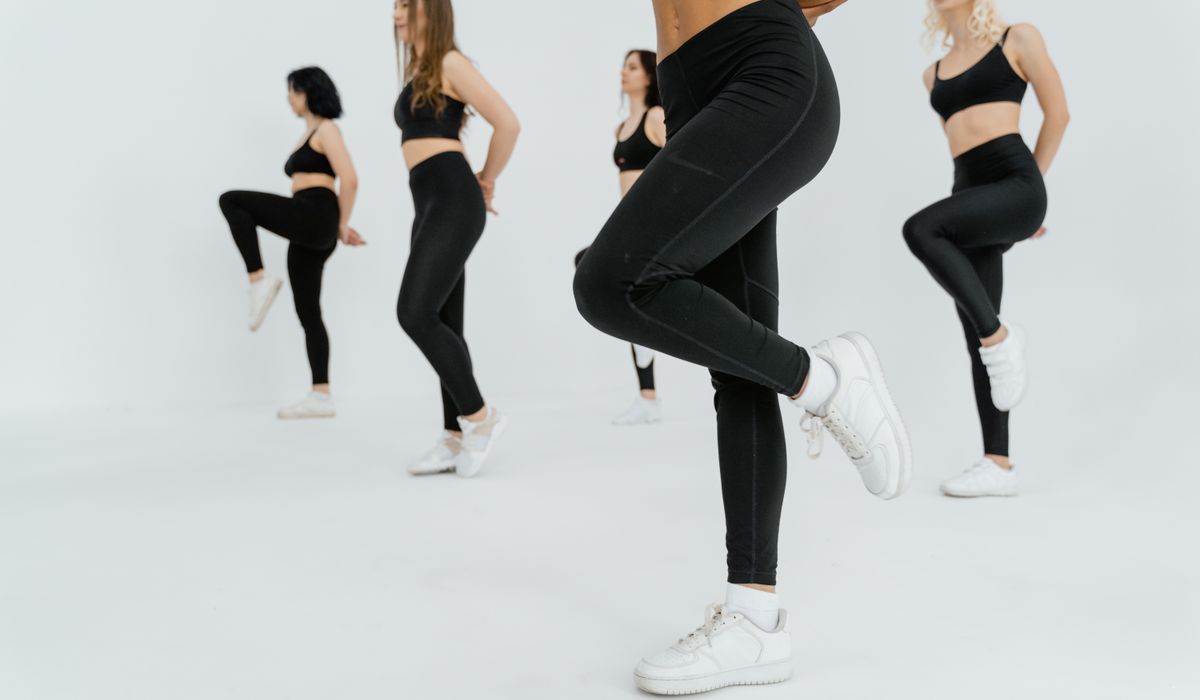
Stand in a quiet corner of a Bath garden on an early autumn morning and watch someone move through a tai chi form. Nothing appears to be happening. And yet everything is happening: weight rolls from one foot to the other, arms rise and settle, the breath deepens without effort. That unhurried exchange — firm and soft, active and passive, filling and emptying — is yin and yang, played out in the body rather than explained in a book.
For anyone in Bath beginning tai chi or qigong, the yin–yang principle is not an abstract philosophy to memorise. It is a practical instruction. It tells you where to put your weight, when to yield, when to be firm, and how to carry that balance into the rest of your day.
If you learn only one thing in your first months of tai chi, learn the weight shift. In most styles, weight rarely sits evenly on both feet. It moves, usually around seventy per cent on one leg and thirty on the other, and the transfer is slow enough that you can feel the moment of change.
This is yin and yang made physical. The weighted leg is yang: full, rooted, weight-bearing. The empty leg is yin: light, receptive, ready to step. When both legs are half-full, you are not balanced — you are stuck. Beginners often try to feel safe by hedging, keeping weight in the middle. The form asks for the opposite: commit fully to one leg, then release and commit to the other.
Tai chi is often described as soft, and so it is — but softness here is not floppiness. Think of a willow in a Bath wind: it bends all the way to the ground and springs back without damage. That spring is yang inside yin. Practitioners sometimes call it an iron needle wrapped in cotton.
You can test this in a simple qigong exercise. Hold your arms out in front of you, elbows slightly bent, as though resting them on water. Now ask a friend to press gently down on your forearms. If you are limp, you collapse. If you are rigid, you push back and lose. The useful response is somewhere in between: yield a little, keep your structure, and let the pressure return to the giver.
This is why push hands practice matters. It teaches you to distinguish between giving way and giving up. In daily life the same skill appears when you listen to a difficult comment without either arguing or agreeing instantly — receiving first, responding second.
Where tai chi is a long, structured form, qigong is often shorter and simpler, and it fits neatly into a busy week. The movements are small and repetitive, and the emphasis is on breath and intention rather than choreography.
Never force the breath. If you find yourself gasping or gripping, make the movement smaller and the breath quieter. The aim is not to achieve a spectacular sensation but to stop interfering with the one you already have.
This city is unusually generous to a movement practice. On a dry morning, the lawn in Royal Victoria Park offers level ground and space to stretch the form out; the grass is forgiving underfoot and the slope towards the Royal Crescent gives you a gentle gradient for balance work. Beside the river below Pulteney Weir, the sound of falling water covers the traffic and gives the breath something to follow.
Bath weather, however, is Bath weather. Have a wet-weather plan. A hallway, a spare bedroom with the furniture pushed back, or a corner of a kitchen will do — you need roughly two paces forward and the width of your outstretched arms. Practise facing a window if you can, with the light on your face rather than behind you.
The hills are an asset too. Walking up towards Beechen Cliff or down through the Circus, slow the pace deliberately and feel how your weight shifts on the incline. Uphill walking naturally lengthens the back leg — exactly what the form asks for.
The real test of yin and yang is not in the park. It is in the queue at the till, when patience is yin and decisive action is yang, and you need both. It is in carrying heavy shopping, where you let the bones and the ground take the load rather than the shoulders. It is in a tense conversation, where yielding for a moment often achieves more than pushing.
Balance does not mean staying neutral. It means knowing which quality is called for, offering it fully, and then letting it go. Soft and firm, empty and full, rest and effort — the form rehearses that exchange dozens of times in fifteen minutes. Take it off the mat and you will find the same rhythm waiting in an ordinary Bath afternoon. You only have to notice it.


We are not gonna make spamming
