
Bath Tai Chi shares practical, down-to-earth guidance on tai chi and qigong for health, balance, and mindful movement in bath for readers across the UK.
- 0123456789
- Angle Bd Abdelmoumen & rue soumaya, Résidence
- [email protected]
Bath Tai Chi shares practical, down-to-earth guidance on tai chi and qigong for health, balance, and mindful movement in bath for readers across the UK.
 By Thomas Greenwood
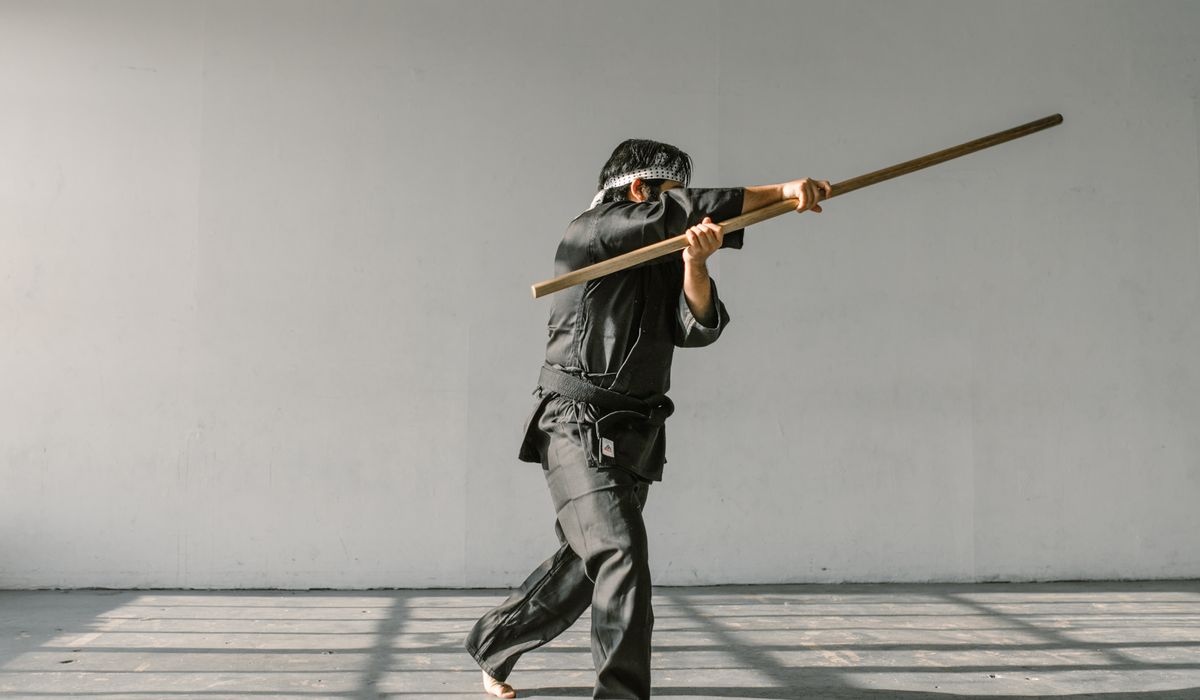
Wu wei is one of those phrases that sounds poetic until you try to practise it. Often translated as effortless action, it appears in the Tao Te Ching as a way of moving through the world without forcing. In a tai chi class in Bath, it shows up as something far more ordinary: the moment you stop muscling your way through a posture and let the shape hold you instead.
It is not laziness, and it is not passivity. Wu wei is a refined kind of effort — precise, unhurried and responsive. The character wei carries a sense of deliberate doing, while wu negates it. Put together, the idea is action that arises naturally from relaxed attention rather than from strain.
Stand in Wu Ji, feet hip-width apart, knees soft. Notice what happens in the shoulders. Most students, especially beginners, lift them without realising. The jaw tightens. The breath shortens. This is the body's default mode: brace first, ask questions later. Wu wei asks you to reverse that order.
Try this in your next class. Before you shift weight into a Bow Stance, pause. Feel the floor beneath both feet. Let the back knee soften a fraction more than you think it needs to. Then allow the weight to travel rather than pushing it. The stance arrives because the body is organised, not because the legs are working harder.
This is where the paradox of softness and strength lives. A relaxed structure can bear more load than a tense one, because tension creates competing forces inside the body. When you stop fighting yourself, you have more energy available for the movement itself.
Forcing shows up in predictable ways. The arms drift upward because the shoulders are doing the work instead of the spine. The hips lock because the student is trying to look correct rather than feel connected. The breath stalls at the top of the inhale because concentration has quietly become tension.
Each of these is a small act of will against the body's design. Wu wei does not ask you to abandon effort; it asks you to place effort where it actually belongs — in the alignment, the intention and the attention.
Bath offers a strangely generous setting for this work. The city is built on slopes, and walking anywhere involves a gentle negotiation with gravity. That daily rhythm is useful training. Notice how you climb the hill towards the Circus — do you push, or do you let the legs and pelvis work together? Most people brace against the incline. A tai chi student learns to yield into it.
If you practise outdoors, the weather will teach you wu wei whether you like it or not. A damp morning in a city park, or a still corner beside the river, refuses to match your agenda. The ground may be uneven, the air cool, the light flat. Instead of resisting, adjust. Soften the knees a little more. Shorten the form if the space is tight. Let the environment set the tempo rather than fighting it.
Indoors, a small studio or a spare room works just as well. Ten minutes of standing practice before the form is often more valuable than an hour of tense repetition.
Qigong and tai chi share the same root: relaxed structure, coordinated breath, and a mind that stays with the body. Qigong tends to strip things back even further. A simple exercise such as Lifting the Sky or Holding the Ball asks for very little — and that is exactly why it exposes forcing so clearly. There is nowhere to hide behind complexity.
Practise a single qigong movement for five minutes. Let the arms rise as though they are floating on water. Let them fall as though the water is releasing them. If you find yourself adding effort, stop, shake out the hands and begin again. This repetition is not a failure of skill. It is the practice itself.
Wu wei is not a technique you master once. It is a habit you return to, often several times within a single form. Here are a few practical cues to carry into your next session:
Strength in tai chi is not the strength of a clenched fist. It is the strength of a body that has stopped arguing with itself. The more you relax into the movement, the more you will find that the posture holds you — and that, quietly, is wu wei at work.


We are not gonna make spamming
